By Maria Luiza de Sousa Mattos | Marimex Communication and Marketing Team
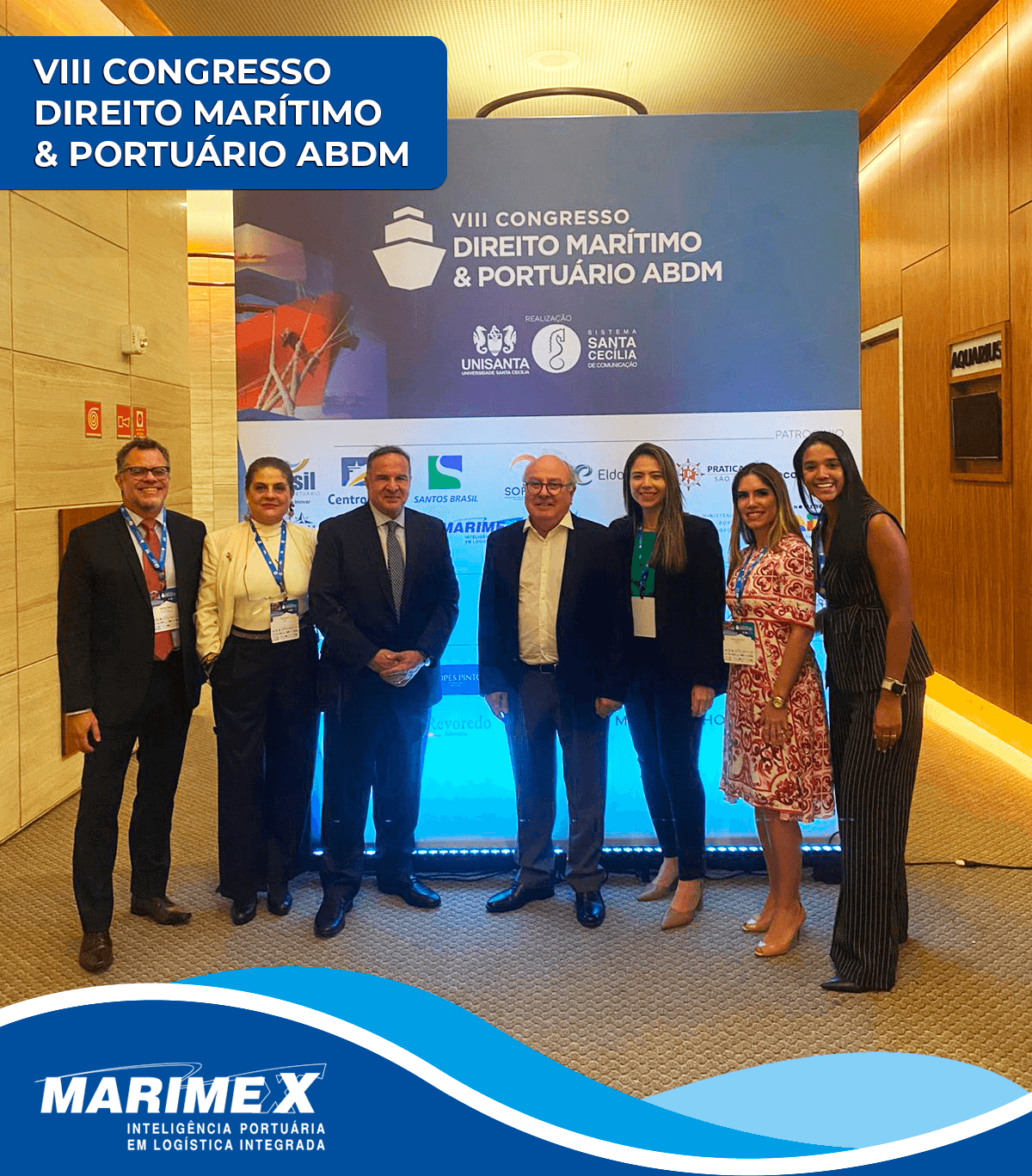
On August 8th and 9th, the Sheraton Hotel in Santos hosted the VIII Brazilian Congress of Maritime and Port Law, promoted by the Brazilian Association of Maritime Law (ABDM) in partnership with Santa Cecília Communication System and Unisanta. Crucial topics, such as the collection of property tax (IPTU) on infrastructure concessions, were highlights of the event, which brought together various industry authorities to discuss these issues.
The opening panel of this edition addressed the review of Brazilian port legislation and the work of the Jurists' Commission for the Legal Review of Port and Port Facility Exploitation (Ceportos), established in March of this year with the aim of revising laws regulating issues related to the exploitation and facilities of the sector by the Union.

Murilo de Aragão, partner at MDA Advogados e Consultores, initiated the debate regarding the collection of property tax (IPTU) on public assets under partnership agreements. The topic was also discussed by Marimex president, Antonio Carlos Fonseca Cristiano, known as Caio, in an interview given to the Porto & Negócios newspaper during the event, in which the lawyer also participated.
During the interview, Mr. Caio highlighted the uncertainties and conflicts of understanding regarding the applicability and retroactivity of this tax. With municipalities imposing charges in some areas and the Supreme Federal Court still needing to decide on the application and retroactivity of the IPTU, the issue is recognized as crucial for the sector, reflecting the need for in-depth debate and a resolution that establishes a uniform standard and reduces litigation.
Marimex considers this matter of great importance for the regulatory stability of companies operating, especially, in Latin America's largest port complex, located in Santos.

The two-day event received institutional support and sponsorship from various associations and companies directly or indirectly related to the sector, including Marimex. Initiatives like this are fundamental for promoting the exchange of theoretical and practical knowledge, strengthening collaboration among the different entities that drive the continuous development of the port sector.
The interaction provided by events of this magnitude contributes to joint evolution and the search for solutions that meet the demands of a segment so strategic for the country's economy.